TMS FAQ
TMS
Frequently Asked Questions
Billing &
Insurance
Is TMS covered by insurance?
Yes, the vast majority of major commercial insurance plans and Medicare offer coverage for TMS therapy when standard medical criteria are met. Our intake team manages the pre-authorization and insurance verification process to clarify your benefits before you begin your first treatment.
Is there a deductible due?
Yes, most major commercial insurance plans require that the deductible be met.
Is there an office fee each visit?
Yes, this fee can be used toward your deductible until it is met.
Do you take Medicare?
Yes.
Do you take Medicaid?
No, we are not in the Medicaid provider system.
Can I Self-Pay?
Yes, self-pay options are available.
Is There a Fee to Make an Appointment?
Yes, to secure your appointment slot. However, the $65 fee will be credited to your appointment invoice.
About
TMS
What is Transcranial Magnetic Stimulation (TMS)?
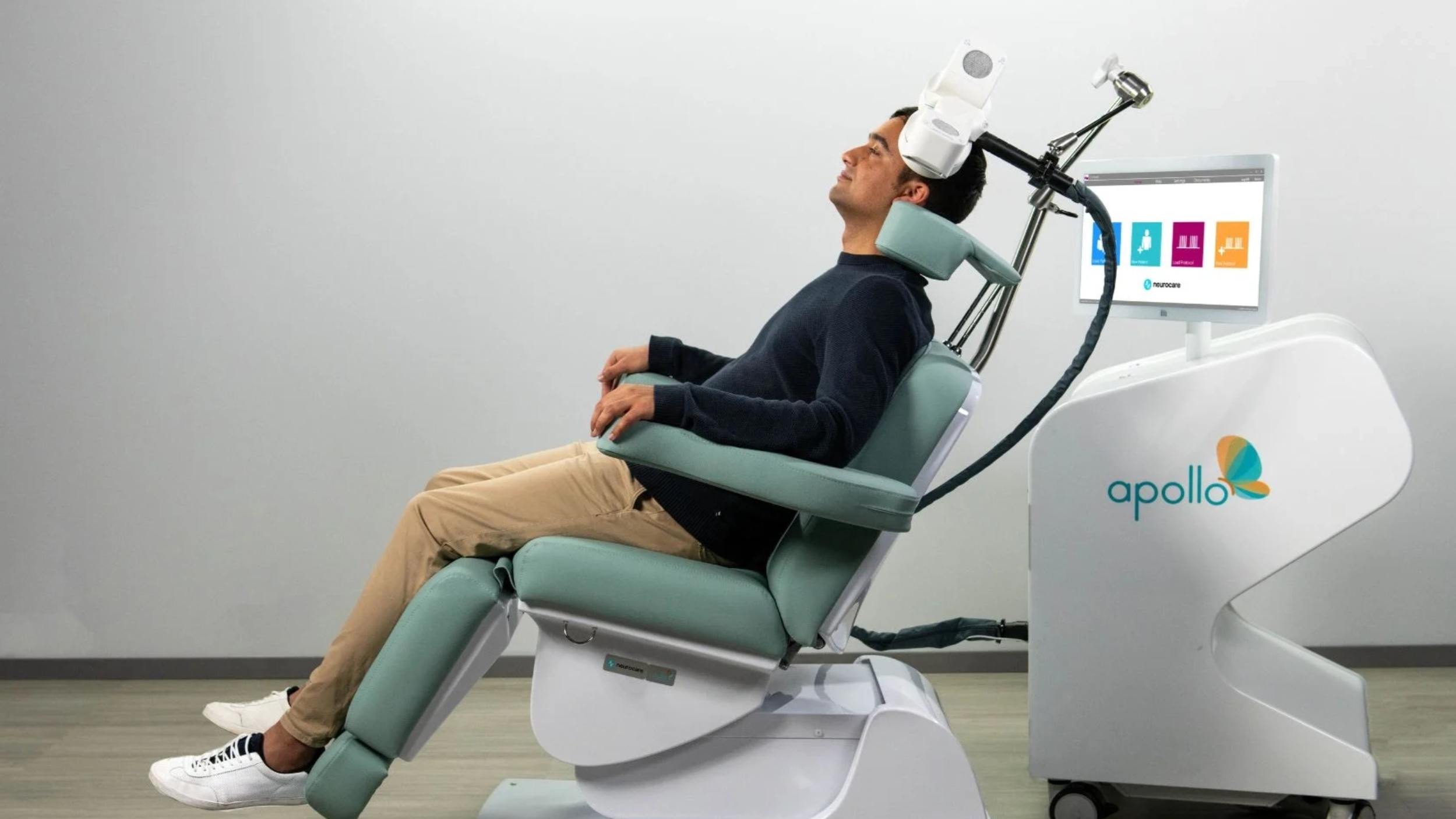
TMS is an FDA-cleared, non-invasive treatment that uses precise magnetic pulses to stimulate underactive brain regions linked to mood regulation. It is designed for individuals who have not experienced sufficient relief from traditional mental health treatments.
Who should not undergo TMS?
TMS may not be suitable for everyone. You should avoid TMS if you have:
-Metallic or electronic implants: This includes cochlear implants, metal plates in the skull, or any other electronic/magnetically susceptible implants. The powerful magnetic field can interact with these materials, potentially causing pain, displacement, or injury.
-A history of seizures or specific neurological conditions: Because there is a rare risk of inducing seizures, TMS is generally not recommended for individuals with epilepsy, a history of seizures, or conditions that significantly affect brain activity. Individuals taking medications that lower the seizure threshold may also be advised against treatment or may require a medication review by their provider.
What does a TMS session feel like?
TMS is a non-invasive, medication-free procedure that does not require anesthesia or sedation. Most patients remain fully awake and alert during their session. The sensation is frequently described as a light, rhythmic tapping on the scalp. Because there is no downtime, patients can typically drive themselves home or return to work immediately following their appointment.
How Long Do Results Last?
One of the primary benefits of TMS is its durability. For those who respond well to treatment, the improvements are often sustained for 6 to 12 months or longer.
While TMS is not a permanent cure, it is highly effective at breaking the cycle of a depressive episode. If symptoms do begin to return months or years later, many patients find that a shorter "booster" course of treatment is very effective at restoring their well-being.
How TMS
Works
Understanding Neuroplasticity and TMS.
Neuroplasticity is the brain's remarkable ability to reorganize itself by forming new neural connections throughout life. In patients suffering from depression, certain areas of the brain—most notably the Left Dorsolateral Prefrontal Cortex (DLPFC)—often show diminished activity. TMS boosts activity in the brain.
How TMS Stimulates Change:
Repetitive Stimulation: The TMS device delivers targeted magnetic pulses to the inactive brain region. This is not just a temporary "boost" of energy; the repetition encourages the neurons to fire more consistently.
Long-Term Potentiation (LTP): As these neurons are stimulated repeatedly, the brain strengthens the communication pathways between them. This is the physiological basis of neuroplasticity.
Restoring Connectivity: By strengthening these pathways, TMS helps "wake up" the areas of the brain responsible for mood regulation, allowing them to communicate more effectively with deeper limbic structures (such as the amygdala) that process emotion.
What is the Difference Between TMS and ECT?
TMS: You sit comfortably in a chair, awake and alert, while a small magnetic coil rests gently against your head. It feels like a light tapping sensation. You can listen to music or talk during your session, and you go about your day immediately afterward.
ECT: This is a hospital-based procedure performed under general anesthesia. It is designed to be highly effective for severe, urgent situations. Because of the anesthesia, you require a recovery period and someone to drive you home.
Treatment
Schedule
What is the Treatment schedule?
If your provider determines that TMS is a safe and appropriate option for you, they will outline a personalized course of treatment.
Standard Protocol: A typical FDA-approved course involves treatments five days a week over six weeks, totaling 30 sessions.
Accelerated Options: Some newer protocols allow for a condensed treatment schedule, sometimes completing the course earlier.
Session Duration: Each session is brief—often lasting around 19 minutes—allowing you to return to your normal routine immediately afterward. The first appointment takes longer to discuss your medical history and determine whether TMS is an option. Insurance and other details are needed before scheduling.
The Typical Timeline of Improvement
TMS is not a "quick fix" but a cumulative treatment. It works by gently stimulating neural pathways over time.
Weeks 1–2: Many patients don't feel a major shift yet, though some report subtle improvements in sleep or energy.
Weeks 2–4: This is when most patients begin to notice clearer, more meaningful changes in mood and mental clarity.
Weeks 5–6 and beyond: The majority of patients experience the most significant, impactful results during this latter stage of the treatment course.
What if I have to miss a treatment?
Let us know 24 hours before, so we can reschedule your appointment. Repetition is important in the success of TMS.
Please note that if you start TMS and do not complete the treatments, your insurance may not cover restarting the process.
Disclaimer: This information is for educational purposes and is based on general clinical research. Individual results will always vary based on factors like the severity of your symptoms, your personal health history, and how your brain responds to the stimulation. Always discuss your specific goals and expectations with your treatment provider.

Book an Appointment
Booking your appointment is simple, and our team is ready to provide the attention, care, and expertise you deserve. Let’s get started—pick a time that works for you.

“Their attention to detail and commitment to quality truly stood out. We’ve already recommended them to others.”
Former Customer
Follow Us on Social